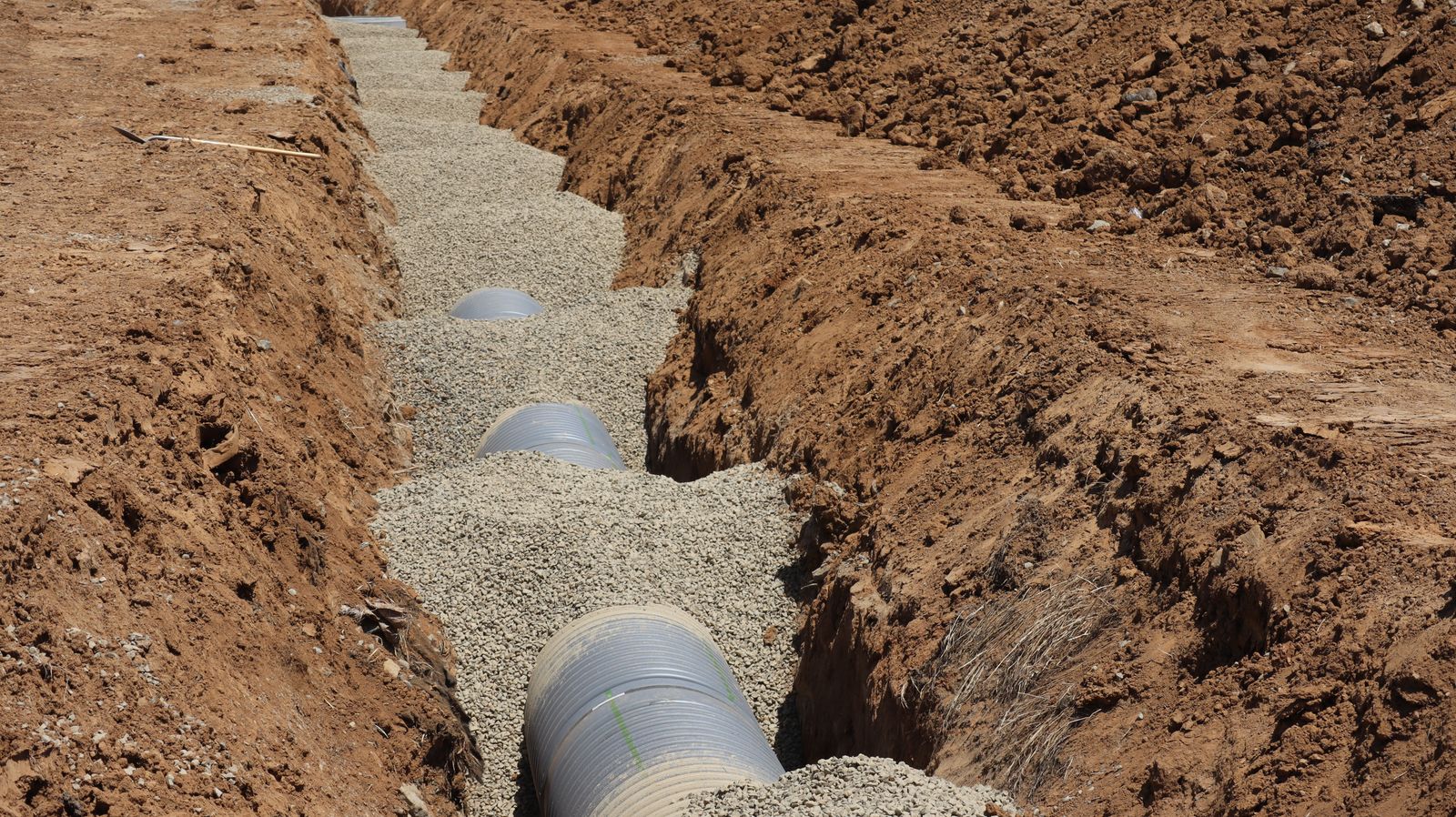
Trenchless sewer repair in Novato is a way of fixing the lateral between the house and the public main through a few small openings instead of one long open trench. For a homeowner with a finished driveway, a mature oak or a new patio over the sewer path, that can change what the whole job looks like.
It is not magic, and it does not suit every line. This page walks through what trenchless means, how the two main methods differ, when a pipe is a good fit and when it is not, and what has to be seen on camera before anyone recommends it.
What trenchless sewer repair means for a sewer lateral
The building sewer, also called the lateral, runs from the house to the public main. "Trenchless" simply describes repair methods that reach that pipe from access points, usually the cleanout, a short section of exposed pipe or a small pit, rather than digging the full length.
Contractors also call it no dig sewer repair, although that label oversells it. There is almost always some digging, just far less of it and in chosen spots.
Sewer pipe lining vs pipe bursting sewer line work
Sewer pipe lining, often called cured-in-place lining, pushes a resin-soaked liner into the existing pipe and cures it so it forms a new pipe inside the old one. It suits a line that is still in a fairly straight, continuous path but has cracks, small offsets at joints or root entry.
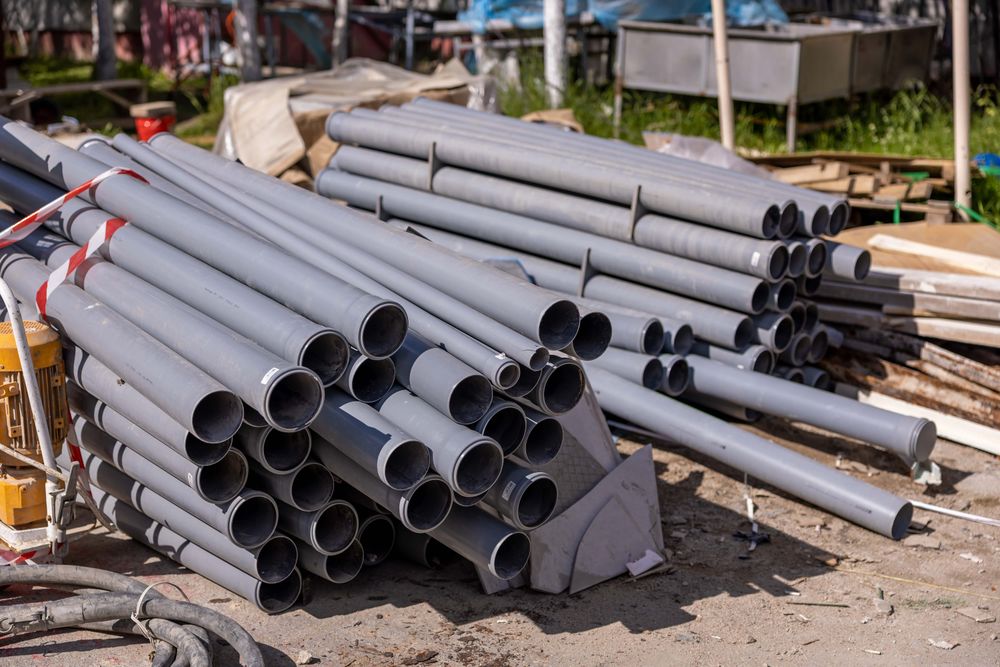
Pipe bursting sewer line work does the opposite: a bursting head is pulled through the old pipe, breaking it outward into the soil while a new pipe of the same or larger size is pulled in behind it. It can handle pipe that is too damaged to line, as long as the path is workable.
| Pipe lining | Pipe bursting | |
|---|---|---|
| What happens | A liner cures inside the existing pipe | The old pipe is broken up and a new one pulled in |
| Suited to | Cracks, root entry, minor joint trouble | Badly cracked or deteriorated pipe on a straight run |
| Needs a clear path | Yes, the old pipe must be passable | Yes, along the line of the old pipe |
| Weak spots | Sags and collapsed sections | Sharp bends and nearby fragile utilities |
| Digging involved | Access points only | An entry pit and an exit pit |
When trenchless is a good fit, and when it is not
A line is a good candidate when the camera shows a continuous pipe with cracks, root entry or deteriorated joints but no collapse. It is a poor candidate when there is a belly or sag that holds water, because lining follows the shape of the old pipe and will not lift it. A section that has fully collapsed, a break where soil is washing in, or a run with several tight bends can also push the job toward an open trench.
Nobody should claim trenchless always works or is always the easier path. Some Novato lines are better served by a short spot repair, and some by a straightforward trench. The choice follows the footage.
Not sure which category your line is in? A short call is enough to talk through what the camera showed.
Get a straight answer by phoneAccess points: cleanouts and small pits
Trenchless work needs a way into the line. If your house has a cleanout, that is usually the starting point at one end. Many older Novato homes never had one, so the first step may be sewer cleanout installation, which gives future crews a clean way in. The larger of the two openings is sometimes called an access pit, and its size depends on the method.
Where the pipe has to be reached in the middle, the crew opens a small pit instead of a long trench. The size and number of pits depend on the depth of the line and the method chosen.
No dig sewer repair on Novato lots with driveways and mature trees
Most Novato lots have something worth protecting over the sewer path: a concrete driveway, a front walk, a retaining wall on a hillside lot or a tree that took decades to grow. Trenchless methods can leave those alone when the line allows it.
Trees are also the reason many laterals fail in the first place. If roots found the joints, the repair has to deal with both the pipe and the way the roots got in. Our page on tree roots in sewer line problems explains how that is handled.
What the camera has to show before anyone recommends lining
Before lining or bursting is on the table, the technician needs video of the whole lateral, a clear idea of where the pipe starts and ends, and a location and depth for any trouble spot. A professional sewer camera inspection provides all three.
The footage answers practical questions. Is the pipe continuous? Is there a sag? Is the diameter consistent?
Are there tight bends? Only then can a fair recommendation be made, and you get to see the same footage the technician sees.
After the work: what to expect from the line
A repaired line still needs sensible treatment. Keep grease out of the drain, avoid flushing anything that is not toilet paper, and ask the technician about the follow-up camera pass some crews do to confirm the result. No repair method makes it impossible for a future problem to appear, and a good technician will not tell you otherwise.
If a backup is what brought you here, read about sewer backup first-response steps while you wait for the visit.
Trenchless sewer repair and Novato homes
Novato was built in waves, and the age of a house hints at its pipe. Postwar tract neighborhoods often have vitrified clay or cast iron laterals with joints that roots have worked into, which is the situation lining was developed for. Newer construction generally uses ABS or PVC, which tend to have fewer joint problems but can still sag where the ground settled.
Hillside lots, especially in western Novato, can mean a steep run with tight bends, while the low eastern side has its own ground conditions. Homeowners in sewer line repair in San Marin and sewer line repair in Downtown Novato face very different lots, which is why each area has its own page.